









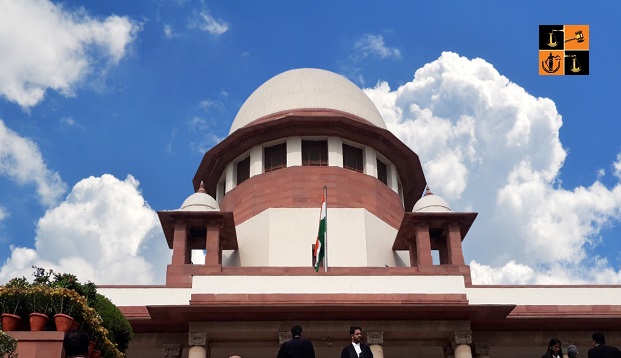
Recently, the Supreme Court dealt with a significant dispute concerning public employment and recruitment norms, emphasizing the strict adherence to prescribed eligibility criteria in government appointments. The case revolved around whether essential qualifications can be relaxed or substituted by higher qualifications during the selection process.
Brief Facts:
The dispute arose from a recruitment process conducted by the Himachal Pradesh Board of School Education for the post of Computer Hardware Engineer. The advertisement required candidates to possess a B.Tech degree along with five years’ prior work experience in a relevant field, with preference given to those holding an M.Tech degree. Among the applicants, the selected candidate secured the highest marks but had only about one year of experience, while another candidate claimed eligibility based on having longer work experience.
Contentions of the Appellant:
The appellant (selected candidate) argued that she was the most meritorious candidate, having secured the highest marks in the selection process. It was contended that the recruitment rules allowed relaxation of eligibility conditions, particularly experience, if a candidate was otherwise well-qualified. She further submitted that her higher qualification (M.Tech) and overall merit justified her selection, and that the absence of detailed reasons for relaxation would not invalidate the appointment.
Contentions of the Respondent:
The respondent (unsuccessful candidate) contended that the appellant’s selection was fundamentally flawed as she did not fulfill the mandatory requirement of five years’ experience at the time of recruitment. It was argued that essential qualifications cannot be bypassed or substituted by higher qualifications. The respondent also emphasised that no material existed to show that the recruiting authority had formally exercised its power to relax the eligibility criteria, making the appointment legally unsustainable.
Observation of the Court :
The Supreme Court made it clear that in public employment, essential qualifications are mandatory and must be strictly complied with. The Court emphasised that eligibility conditions cannot be relaxed casually or substituted by higher qualifications like a postgraduate degree. It categorically observed that “the requirement of experience is a threshold condition which must be fulfilled by all candidates seeking consideration” and that “a preference operates only within the zone of eligible… it does not enlarge or modify the field of eligibility itself.”
Rejecting the argument that a higher qualification can compensate for lack of experience, the Court stated that “the mere possession of such a higher academic degree does not… render a candidate ‘otherwise eligible’.” It further highlighted that even though rules may provide for relaxation, such power must be exercised consciously and with reasons, observing that “the mere existence of the power of relaxation does not obviate the manner of its exercise” and “in absence of any material… it cannot be presumed that the requirement… stood waived.”
Overall, the Court stressed that recruitment must strictly follow notified rules, and any selection made in violation of essential criteria suffers from illegality.
Decision of the Court :
The appeals were dismissed, the High Court judgment was upheld, and the selection of the candidate was set aside. The Court declined to appoint any other candidate and granted liberty to the authority to conduct a fresh recruitment process in accordance with the rules.
Case Title: Himakshi v. Rahul Verma & Ors.
Case No.: Civil Appeal No. 5942 of 2023 (with Civil Appeal No. 5943 of 2023)
Coram: Hon’ble Mr. Justice J.K. Maheshwari and Hon’ble Mr. Justice Atul S. Chandurkar
Advocate for the Appellant: Sr. Adv. P. S. Patwalia, AOR Natasha Dalmia, Adv. Anisha Jain, Adv. Shambhavi, Adv. Prerna Cheema, Sr. Adv. M. C. Dhingra, AOR Gaurav Dhingra, Adv. Kunal Verma.
Advocate for the Respondent: Sr. Adv. M. C. Dhingra, Adv. Kunal Verma, AOR Gaurav Dhingra, Sr. Adv. P. S. Patwalia, AOR Natasha Dalmia, Adv. Anisha Jain, Adv. Shambhavi, Adv. Prerna Cheema, AOR Varinder Kumar Sharma.
Read Judgment @Latestlaws.com
Picture Source :




















